ReMateria Lab®® remateria.lab
EN PL NL EL ES IT
ReMateria Lab®® remateria.lab
Team Services News Contact
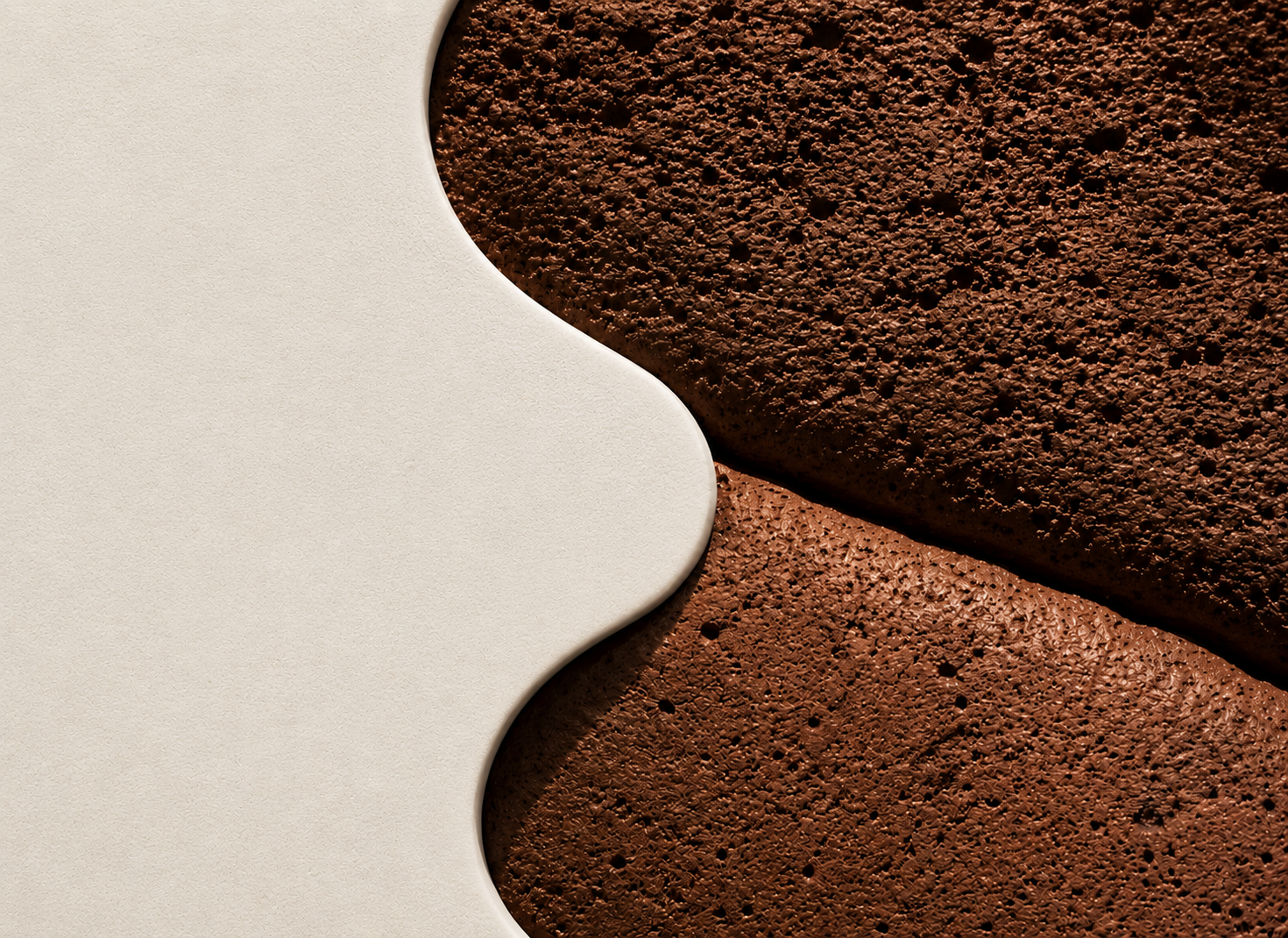
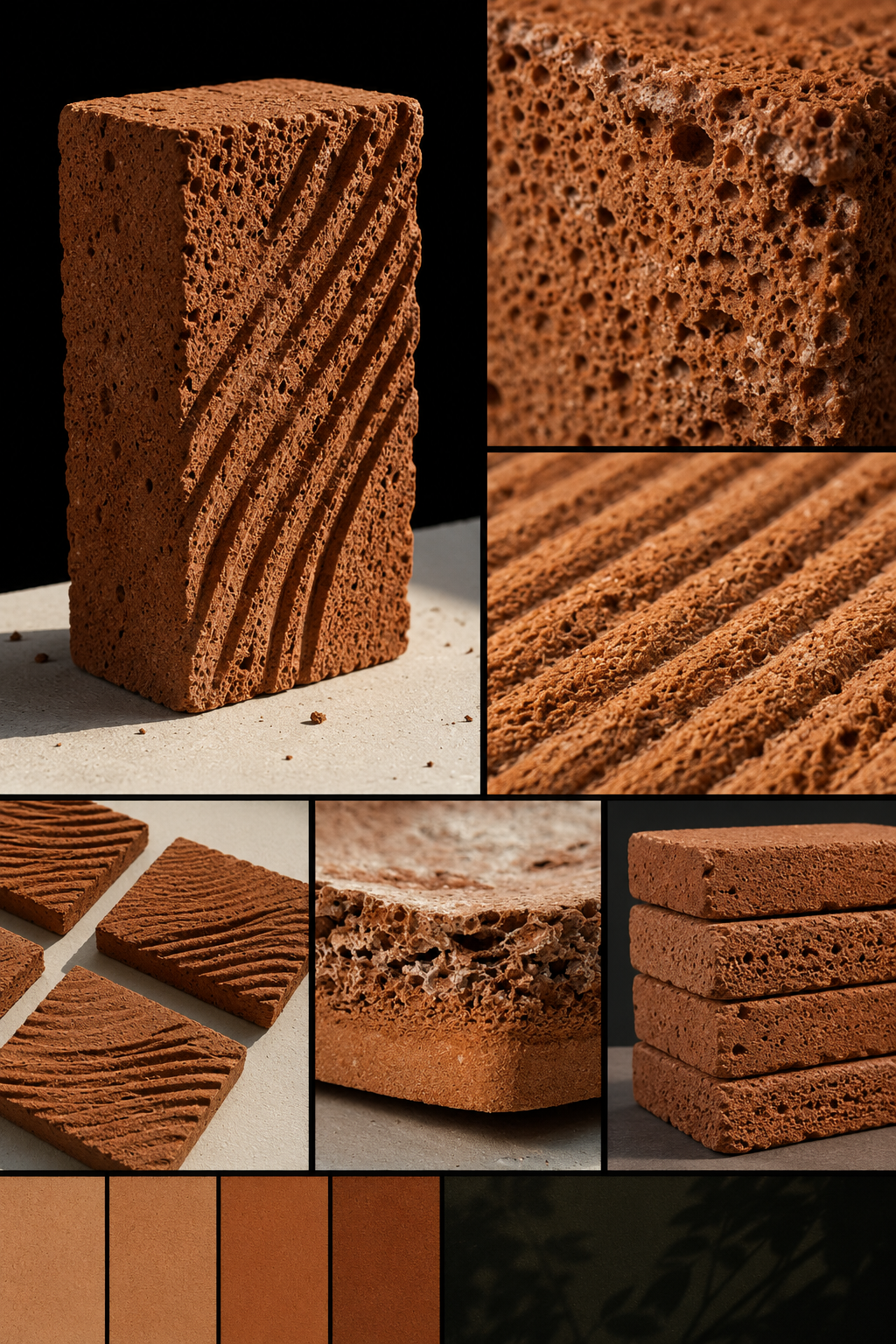
Terracotta and clay material texture
/001 — Material Research

Designing circular materials.

Scroll
/002 — Mission

Our mission is to accelerate the transition toward a circular built environment — where waste becomes a resource, and materials are designed with their next life in mind.

No. Pillar Description
01 Material Innovation Researching and developing new circular materials from construction and demolition waste.
02 Circular Sourcing Prioritising local, secondary resources over virgin raw materials in every project.
03 Industry Education Sharing our research through workshops, publications and open collaboration with the industry.
/003 — What We Do

We don't start by choosing a material — we start by understanding what is already available: in a building, a construction site or a territory.

01
Investigate

Mapping waste streams, existing buildings and local resources to see what's already there.

Waste stream mapping  ·  Site & material surveys  ·  Resource inventories
02
Harvest

Treating existing buildings and demolition waste as material banks, not disposal problems.

Material banking  ·  Sorting & classification  ·  Reuse assessment
03
Prototype

Turning research into physical material samples, components and tested formulations.

Formulation testing  ·  Sample fabrication  ·  Performance testing
04
Design

Translating circular materials into real, buildable architectural applications.

Material specification  ·  Architectural application  ·  Detailing & documentation
/004 — Our Material

What if waste were not an endpoint?

We're living through three crises that are supposed to be separate, but aren't: a climate crisis that demands new materials, a housing crisis that demands we keep building, and a resource crisis where what we extract is running out.

Construction sits at the centre of all three. Every demolition site is a quarry we've already paid to extract — and yet we throw it away. What's missing isn't ambition. It's a way to turn yesterday's buildings into tomorrow's materials.

That's where ReMateria steps in. We take construction and demolition waste — concrete, brick, stone — and reintroduce it into an entirely new material cycle. Not downcycled into filler, but rebuilt into a system.

We process that waste into a powder, then into a geopolymer material — essentially a liquid — that can be shaped freely. The real breakthrough: we chemically foam it, creating air pockets that make it lighter, and better insulating, thermally and acoustically, than the material it came from.

The material sets at room temperature — no firing, no kiln. The result is carbon-neutral by design. This isn't theoretical: we've already built and tested working prototypes.

A concrete wall doesn't have to come back as a wall — it can become flooring, a finish. That's only possible because ReMateria takes a holistic approach, where material and design feed each other.

Architects get the freedom to shape the material around a space, instead of picking one off a shelf. Cities get to meet housing demand without extracting more from the ground.

/005 — Material Library

A closer look at the materials we develop.
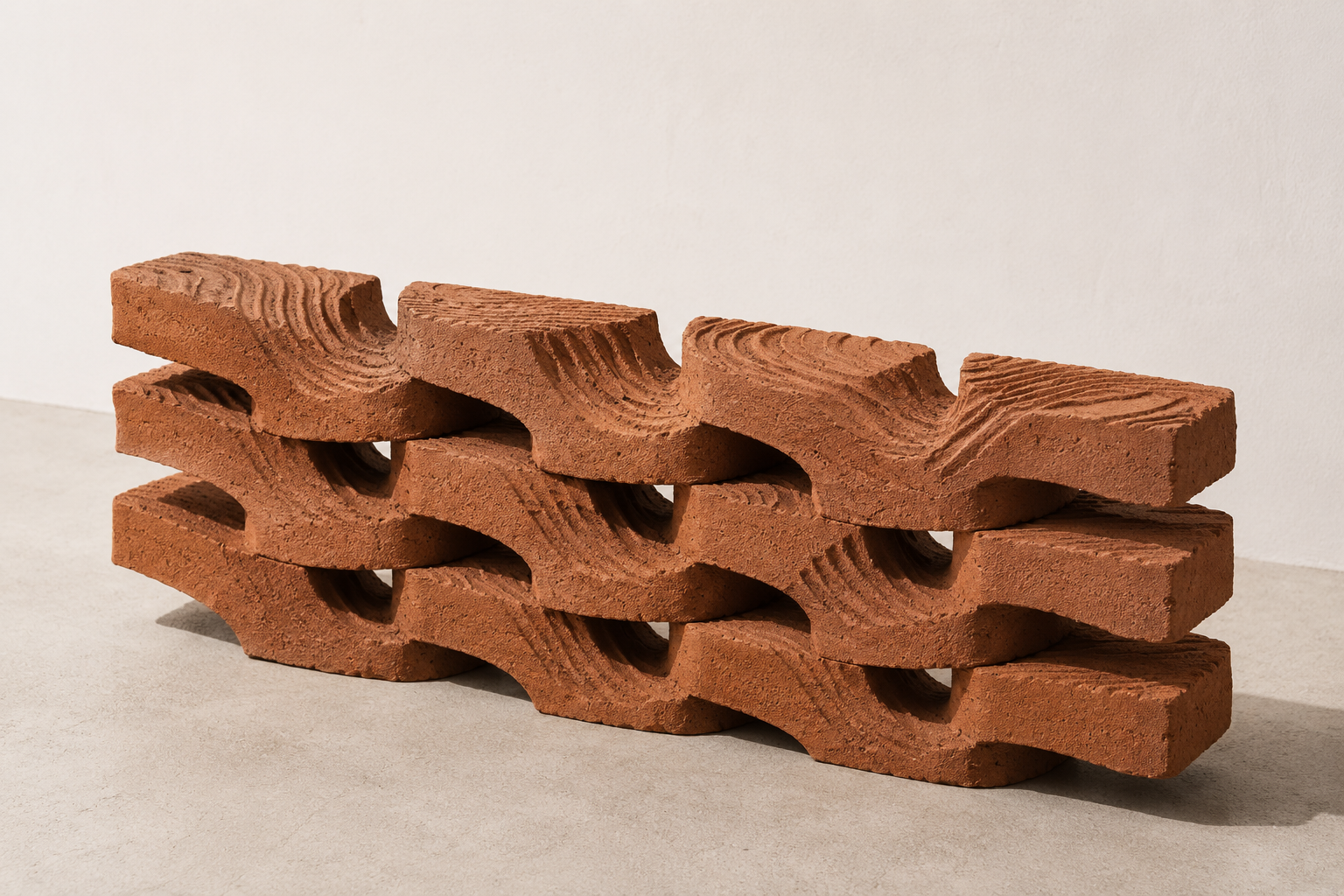
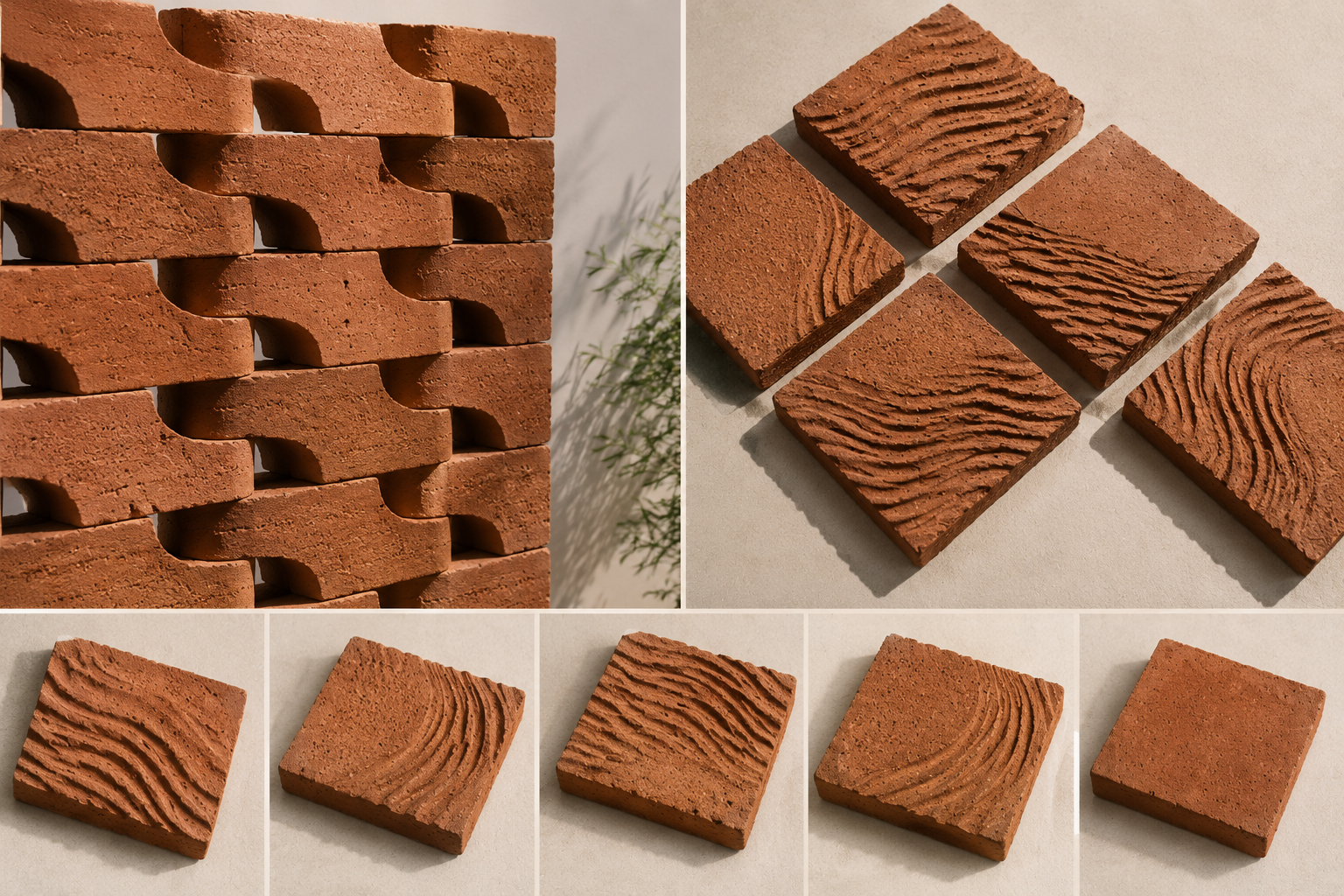
FRICKS brick wall application
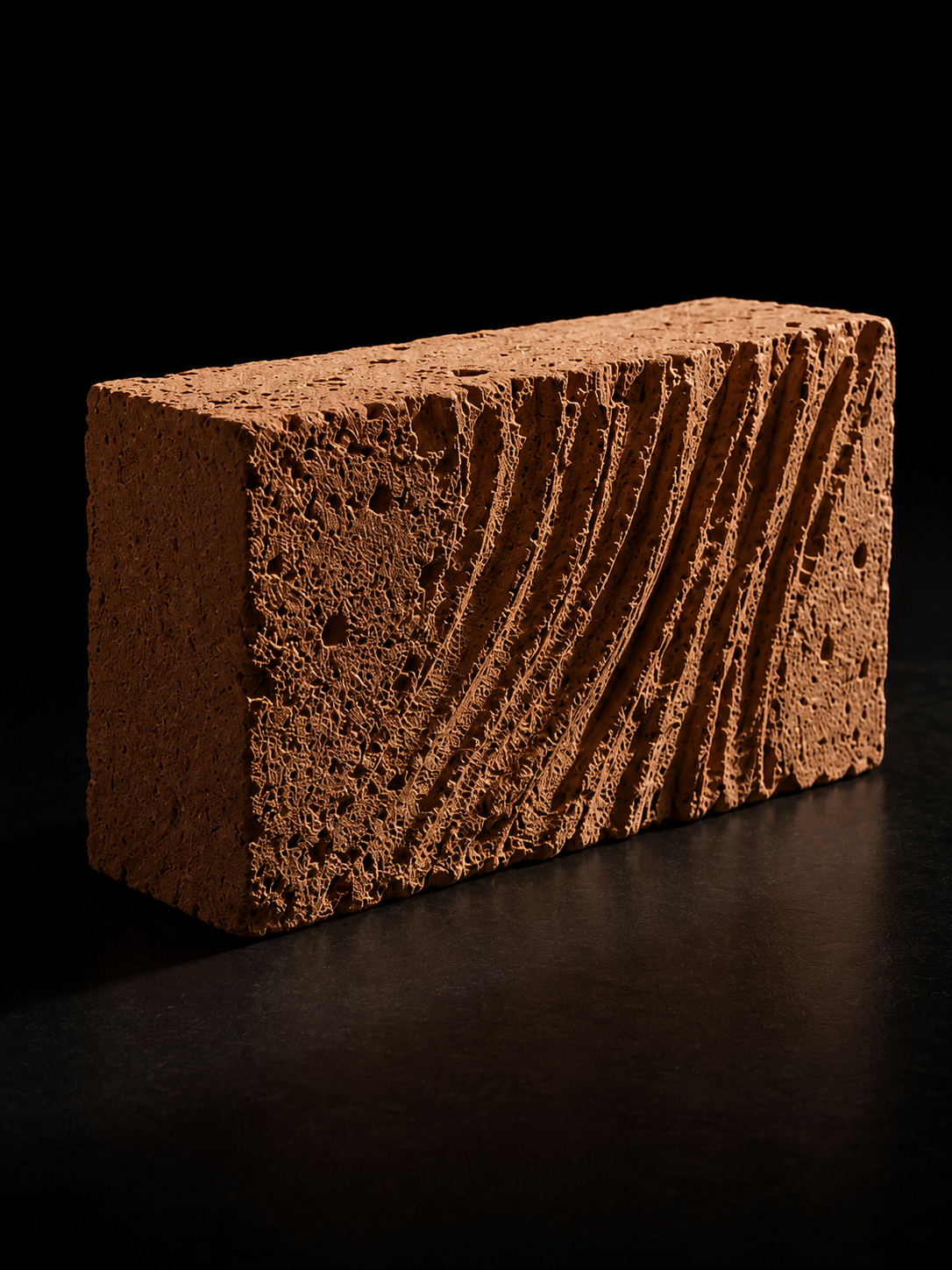
FRICKS stacked brick prototype
FRICKS tile and wall detail collage
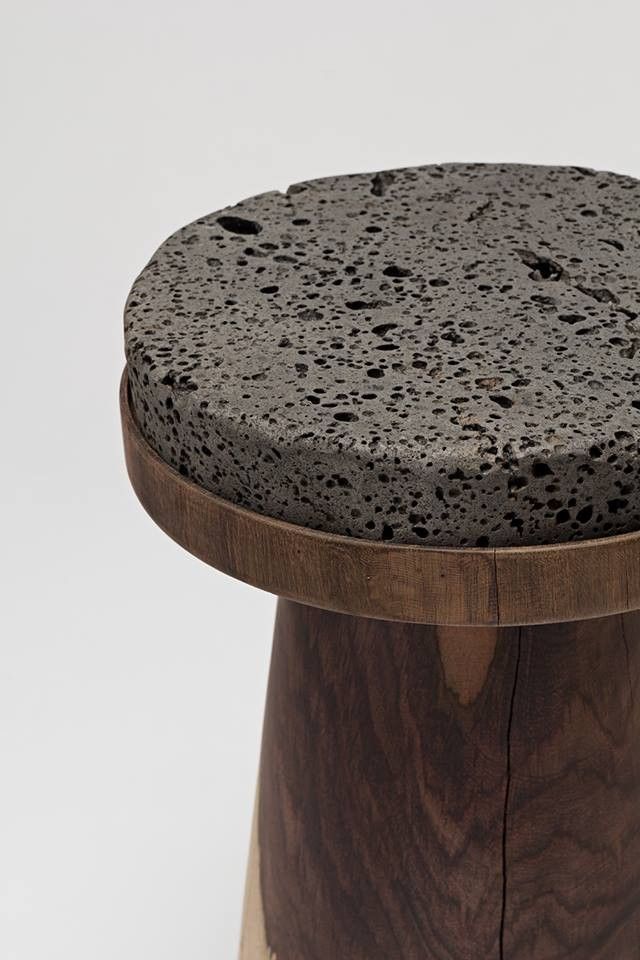
Volcanic stone and wood material detail
FRICKS brick material study collage
/006 — Material Properties

What makes our circular materials work.

No. Property Description
01 Secondary Resources Built from construction and demolition waste already available on site, not virgin raw material.
02 Circular Design Every material is designed with its next life in mind, from sourcing to eventual reuse.
03 Geopolymers Our core research direction: mineral binders that cure at room temperature, without firing.
04 3D-Printed Digitally fabricated moulds and formwork bring precision and customisation to every piece.
05 Low Embodied Energy Curing without firing or artificial drying keeps embodied energy far below conventional fired materials.
06 Lightweight & Insulating Foamed, porous structures that stay light in weight while performing well thermally.
/007 — Services

Working across three connected fields.

Show All →
No. Field Description
01 Materials → Resource research, harvesting & reuse, R&D, prototyping and environmental assessment. 02 Design → Circular renovation strategy, circular architectural design, digital fabrication & experimental design. 03 Collaboration → Workshops & training, local innovation networks, funding support and project-specific material labs.
/008 — Why It Matters

Construction is one of the world's largest sources of waste — and one of its greatest untapped opportunities.

Most construction still follows a linear path: extract, build, demolish, discard. That path is reaching its limits. ReMateria exists to interrupt it — treating waste streams, existing buildings and local territories as sources of new material possibility, not problems to be managed. This is where circular economy stops being a policy goal and becomes something you can actually build with.

~30% of all global waste comes from construction and demolition.
<30% of construction and demolition waste is ever recovered or reused.
~40% of global raw material consumption goes into construction alone.
/009 — UN Sustainable Development Goals

Global goals our work contributes to.

No. Goal Description
09 Industry, Innovation and Infrastructure Researching new material technologies that make construction more resource-efficient.
11 Sustainable Cities and Communities Reducing construction waste and supporting more resilient, resource-conscious cities.
12 Responsible Consumption and Production Turning waste streams into new material resources instead of extracting virgin raw materials.
Source: sdgs.un.org

From existing resources to new architectural possibilities.

Work With Us Explore Our Services